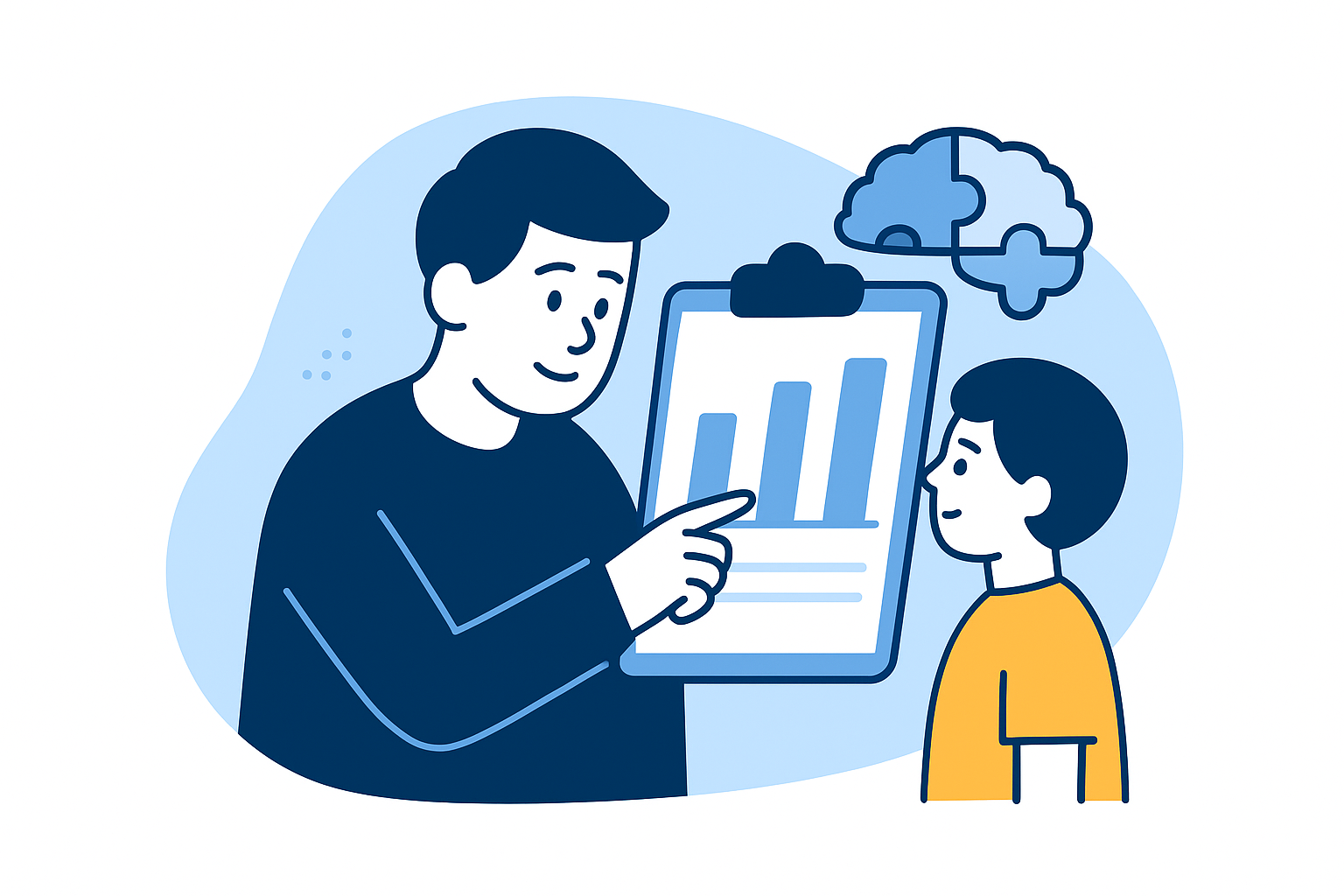
10. The Parent's Data Advantage: Tracking Patterns Across Time and Settings
Your observations are the long view. See how to identify patterns over months and years, the real story of growth and struggle. Learn how to use your longitudinal data to flag red-alert patterns, such as compensating students or declining trajectories, that schools often miss.
11. What Educational Tests Actually Measure (And What They Miss)
A test is a sample, not a full portrait. Break down what standardized, diagnostic, and criterion-referenced tests truly capture, and what they leave out, from creativity to emotional regulation. Learn to ask the essential question: "What does this score not tell us?"
12. Advocating for Fit, Not Fix: Using UDL to Design Learning
When the problem isn't ability, it's design. Discover how Universal Design for Learning helps shift focus from "fixing" the child to building environments that fit diverse learners. Learn what questions to ask to ensure instruction and assessments adapt to your child's profile.
13. Framing Your Case: Turning Emotion and Observation into Powerful Advocacy
From emotion to evidence. Learn how to organize your data: test scores, teacher notes, your own logs, into a clear advocacy case. Master the art of collaborative communication: respectful, fact-based, and solution-focused.
14. Building Relational Trust: Becoming a True Partner with Your Child's School
Trust is the bridge between data and change. Understand how to shift from "involvement" to genuine partnership. Explore how to use data conversations to co-design goals, ensure transparency, and strengthen mutual trust with teachers and administrators.
15. From Insight to Action: Designing the Next Step for Your Child
How to turn understanding into a personalized plan. The final article brings everything together: using your detective skills, data patterns, and advocacy mindset to design interventions that honor both the data and the child. Learn how to monitor progress, evaluate impact, and keep the focus on the whole learner.