AI did not end the data literacy crisis. It changed it. As machines move from providing information to interpreting it and recommending what to do, the scarce skill is becoming judgment: knowing what to trust, what to question, and what decisions are still ours to make.
Evidence does not make decisions. People interpret it, weigh it, challenge it, and make judgments. A courtroom reveals what leaders can learn about evidence, expertise, confidence, and data-informed decision-making.
Feeling sure doesn't mean you're right. Learn five simple ways to question what feels true, spot what might be influencing you, and make better decisions about what to believe.
We often hear the phrase "let the data speak." However, data rarely speaks for itself—it requires careful interpretation to reveal its stories and insights. Understanding how to effectively summarize and interpret business data is becoming as crucial as collecting it, yet many professionals struggle with transforming numbers into meaningful insights that drive action.
Understanding the Foundation - What Makes Data Meaningful
Before diving into specific techniques, we need to understand what makes data interpretation valuable. Think of business data like the pieces of a puzzle: individual numbers might be interesting, but their true value emerges when we see how they fit together to create a complete picture. Effective interpretation helps us see both the individual pieces and the larger image they form.
Consider a sales dataset. Individual transaction records might show us what happened at specific moments, but interpretation helps us understand the broader patterns: Are certain products typically purchased together? Do sales follow seasonal patterns? Are customer preferences shifting over time? These insights emerge not from the raw numbers themselves, but from how we analyze and interpret them.
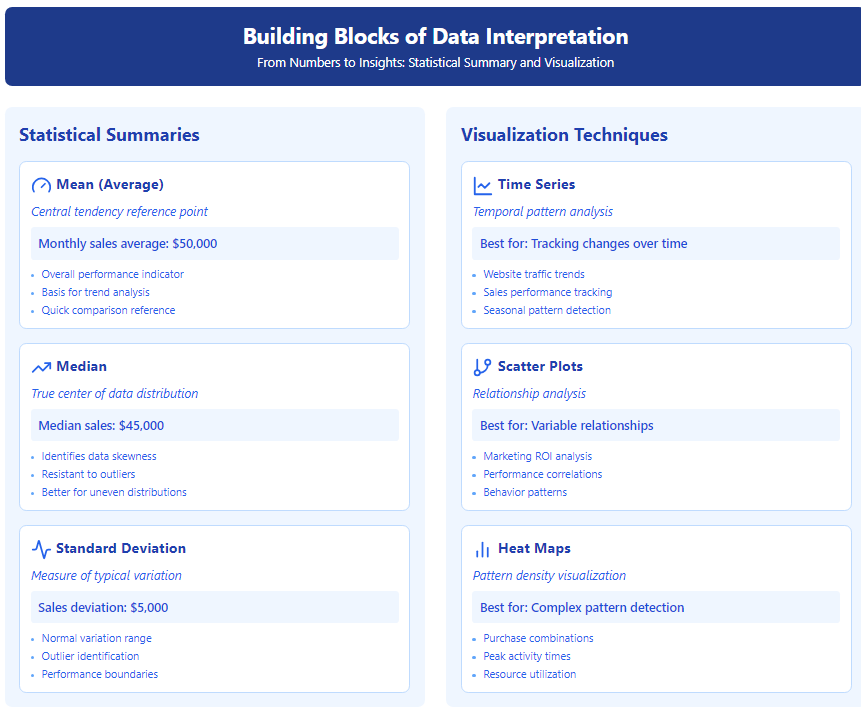
The Building Blocks of Data Interpretation
Successful data interpretation relies on three fundamental components: summarization, visualization, and contextual analysis. Let's explore how these work together to create meaningful insights.
This ends the free preview.
The rest of this
content is for paid subscribers
Become a paid subscriber to get full access and unlock all paid content.
Evidence does not make decisions. People interpret it, weigh it, challenge it, and make judgments. A courtroom reveals what leaders can learn about evidence, expertise, confidence, and data-informed decision-making.
Feeling sure doesn't mean you're right. Learn five simple ways to question what feels true, spot what might be influencing you, and make better decisions about what to believe.
We teach data literacy as a ladder: data at the bottom, wisdom at the top, climb step by step. But the rungs are not where the work happens. The judgment lives in the gaps between them, and that is exactly where AI now carries us straight past.
Every organization keeps one scoreboard for mistakes and none for missed opportunities. So people optimize the one they can see, and the largest losses never appear as losses at all. They appear as things no one tried.