AI did not end the data literacy crisis. It changed it. As machines move from providing information to interpreting it and recommending what to do, the scarce skill is becoming judgment: knowing what to trust, what to question, and what decisions are still ours to make.
Evidence does not make decisions. People interpret it, weigh it, challenge it, and make judgments. A courtroom reveals what leaders can learn about evidence, expertise, confidence, and data-informed decision-making.
Feeling sure doesn't mean you're right. Learn five simple ways to question what feels true, spot what might be influencing you, and make better decisions about what to believe.
From Patterns to Predictions. A Professional's Guide to Analytics
Discover how businesses use data to anticipate future trends and outcomes with remarkable accuracy. Learn the fundamentals of predictive analytics—from data collection to model building.
Imagine if businesses could peek into the future—not with a crystal ball, but with something far more reliable: their own data. This is the promise of predictive analytics, a powerful approach that helps organizations anticipate future events, behaviors, and outcomes by learning from their historical data. While it might sound like science fiction, predictive analytics is already transforming how businesses operate, from anticipating customer needs to preventing equipment failures before they occur.
Understanding Predictive Analytics
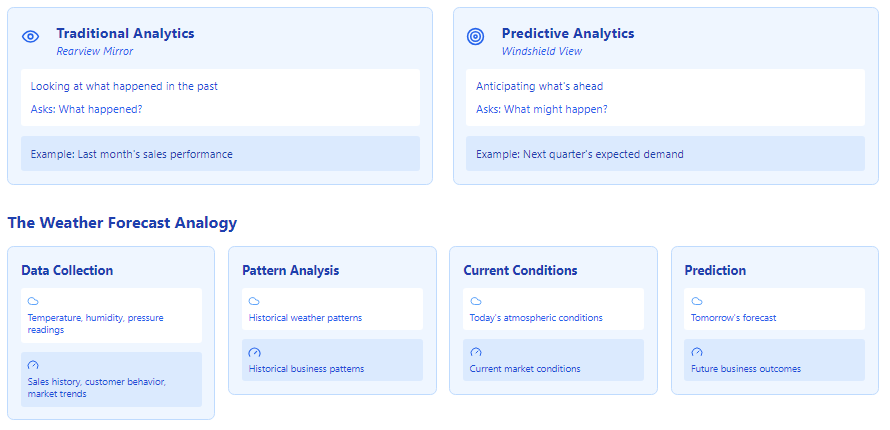
Traditional business analytics tells us what happened in the past—like looking in a rearview mirror while driving. Predictive analytics, by contrast, helps us look through the windshield to see what's coming. It combines historical data, statistical algorithms, and machine learning to identify patterns and predict future outcomes with remarkable accuracy.
Consider how a weather forecast works: meteorologists don't just guess tomorrow's weather—they analyze historical weather patterns, current conditions, and atmospheric data to make predictions. Predictive analytics works similarly, but for business outcomes. Instead of predicting rain, it might predict which customers are likely to leave, which equipment might fail, or which products will be in highest demand.
How Predictive Analytics Works
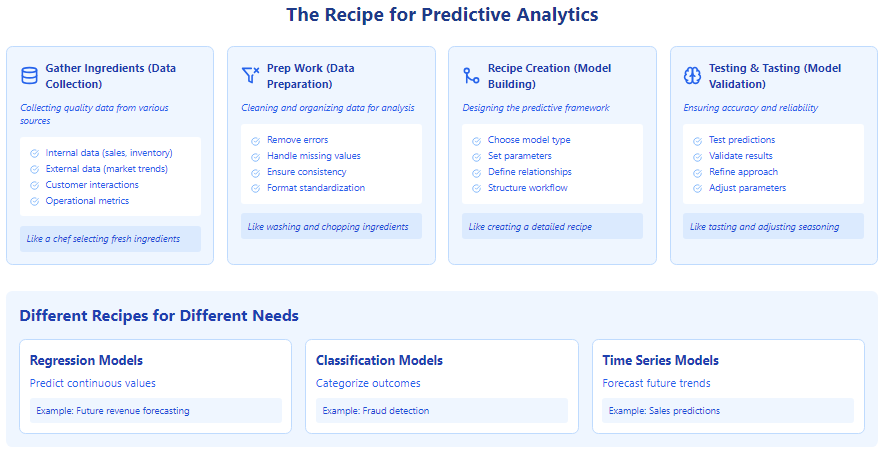
Understanding predictive analytics requires breaking down its key components and how they work together to create valuable predictions.
This ends the free preview.
The rest of this
content is for paid subscribers
Become a paid subscriber to get full access and unlock all paid content.
Evidence does not make decisions. People interpret it, weigh it, challenge it, and make judgments. A courtroom reveals what leaders can learn about evidence, expertise, confidence, and data-informed decision-making.
Feeling sure doesn't mean you're right. Learn five simple ways to question what feels true, spot what might be influencing you, and make better decisions about what to believe.
We teach data literacy as a ladder: data at the bottom, wisdom at the top, climb step by step. But the rungs are not where the work happens. The judgment lives in the gaps between them, and that is exactly where AI now carries us straight past.
Every organization keeps one scoreboard for mistakes and none for missed opportunities. So people optimize the one they can see, and the largest losses never appear as losses at all. They appear as things no one tried.